
How to Appeal a Health Insurance Claim Denied Due to Preventive vs Diagnostic Coding When Insurance Reclassifies “Free Preventive Care” as Billable — and How to Reverse It in the U.S.
How to Appeal a Health Insurance Claim Denied Due to Preventive vs Diagnostic Coding When Insurance Reclassifies “Free Preventive Care” as Billable — and How to Reverse It in the U.S.
6/16/20264 min read
How to Appeal a Health Insurance Claim Denied Due to Preventive vs Diagnostic Coding
When Insurance Reclassifies “Free Preventive Care” as Billable — and How to Reverse It in the U.S.
Few insurance denials feel more deceptive than this:
“The service was billed as diagnostic, not preventive.”
Translation:
What you thought was covered at 100% is now your bill.
In reality, preventive vs diagnostic coding disputes are one of the most common — and most misunderstood — causes of denied or partially denied health insurance claims in the U.S. Insurers frequently rely on technical coding distinctions to shift costs to patients, even when the visit clearly qualifies as preventive care under federal law.
When challenged correctly, many of these denials are reversed, especially when the clinical intent and sequence of care are properly documented.
This guide explains how preventive care coverage works, why insurers reclassify visits, and how to appeal step by step — without letting coding games override consumer protections.
What “Preventive” vs “Diagnostic” Really Means
Preventive care is intended to:
Screen for disease
Detect conditions early
Maintain health before symptoms appear
Diagnostic care is intended to:
Evaluate symptoms
Investigate known conditions
Confirm or rule out suspected disease
The key distinction is clinical intent at the start of the visit, not everything that happens during it.
Why Insurers Reclassify Preventive Visits
Insurers often reclassify because:
Additional findings were discussed
A symptom was mentioned
A test went beyond baseline screening
A diagnosis code was added
But discussing findings does not automatically convert a preventive visit into a diagnostic one.
ACA Protections for Preventive Care Are Strong
Under the Affordable Care Act:
Many preventive services must be covered at 100%
No copay, no deductible
Applies when services are delivered as recommended
Appeals should emphasize:
ACA preventive service requirements
USPSTF or guideline recommendations
Timing and purpose of the visit
Preventive coverage is a legal mandate, not a courtesy.
The Starting Purpose of the Visit Controls
One of the strongest appeal principles:
If the visit was scheduled as preventive, it does not become diagnostic simply because something was discovered or discussed.
Appeals should document:
Appointment reason
Intake forms
Scheduling records
What triggered the visit matters most.
Incidental Findings Do Not Eliminate Preventive Coverage
Many preventive visits uncover:
Elevated labs
Minor findings
Risk factors
Appeals should argue:
Incidental findings are expected
Follow-up recommendations do not reclassify the visit
Preventive intent remains intact
Discovery ≠ diagnosis.
Insurers Often Over-Rely on Diagnosis Codes
A common insurer tactic:
Focusing on ICD-10 codes
Ignoring CPT service codes and visit context
Appeals should emphasize:
The service code used
The preventive nature of the visit
That diagnosis codes can reflect findings, not intent
Coding nuance matters.
Providers Sometimes Code Correctly — Insurers Still Deny
Even when:
Preventive CPT codes are used
Modifiers are applied
Insurers may still:
Reprocess as diagnostic
Apply cost-sharing
Appeals should challenge:
The insurer’s interpretation
Internal coding policies
Failure to follow federal guidance
Coding compliance often favors the patient.
Mixed Visits Require Careful Handling — Not Automatic Denial
Some visits legitimately include:
Preventive care
Diagnostic evaluation
Appeals should argue:
Preventive portion remains covered
Diagnostic portion must be separately identified
All-or-nothing denial is improper
Insurers often mis-handle mixed visits.
Colonoscopies and Cancer Screenings Are Commonly Misclassified
Classic examples:
Screening colonoscopy becomes diagnostic after polyp removal
Mammogram becomes diagnostic after follow-up
Appeals should emphasize:
Initial preventive intent
Federal guidance on screenings
That follow-up findings do not retroactively change purpose
These denials are frequently overturned.
Lab Tests and Imaging Trigger Frequent Disputes
Insurers often deny when:
Screening labs reveal abnormalities
Imaging detects unexpected issues
Appeals should argue:
Screening intent governs coverage
Diagnostic follow-up applies only going forward
Initial tests remain preventive.
Provider Notes Can Make or Break These Appeals
Appeals are strongest when:
Notes clearly state “preventive visit”
The chief complaint reflects wellness
The assessment distinguishes screening from evaluation
Clarifying documentation often resolves disputes quickly.
Insurers Often Ignore Federal Guidance
Federal agencies have clarified that:
Preventive services remain covered even when abnormalities are found
Appeals should argue:
Insurer policies cannot override federal law
Internal guidelines must comply with ACA standards
Regulators expect compliance.
ERISA Plans Are Still Bound by Preventive Mandates
Even under ERISA:
ACA preventive requirements apply
Insurers must justify cost-sharing
ERISA appeals should challenge:
Failure to follow preventive mandates
Improper reliance on diagnosis coding alone
Technical coding does not override statutory protection.
Prior Representations and Coverage History Matter
Appeals are strong when:
Similar visits were covered before
The insurer marketed preventive benefits
The insurer approved the visit
Reliance and consistency matter.
External Review Is Highly Effective
External reviewers often:
Focus on visit purpose
Reject coding-based reclassification
Enforce preventive care mandates
Many insurers reverse before review concludes.
Regulatory Complaints Accelerate Resolution
Preventive-care disputes are excellent candidates for:
State insurance complaints
Federal consumer complaints
Regulators actively enforce preventive coverage.
Documentation That Wins Preventive Coding Appeals
Strong appeals include:
Appointment scheduling records
Preventive CPT codes
Provider notes
Federal preventive guidelines
Prior EOBs
Timeline and intent are decisive.
Common Mistakes When Appealing These Denials
Avoid these errors:
Accepting “diagnostic” labels at face value
Ignoring scheduling intent
Not involving the provider
Paying the bill prematurely
Giving up too early
Coding disputes are technical — and winnable.
Why These Appeals Often Succeed
They succeed because:
Insurers over-simplify coding
Preventive mandates are strong
Documentation supports intent
Reviewers favor consumer protection
Once intent is clear, cost-shifting collapses.
How to Know If Your Preventive Denial Is Vulnerable
Ask:
Was the visit scheduled as preventive?
Would it normally be covered at 100%?
Did findings occur during the visit?
Is the insurer relying solely on diagnosis codes?
If yes to any, you likely have strong appeal leverage.
The Mindset Shift That Wins Preventive Coding Appeals
Stop asking:
“Why did they change the code?”
Start asserting:
“This visit was preventive by design, and incidental findings do not eliminate preventive coverage under federal law.”
That reframes the dispute legally.
A Smarter Way to Appeal Preventive vs Diagnostic Denials
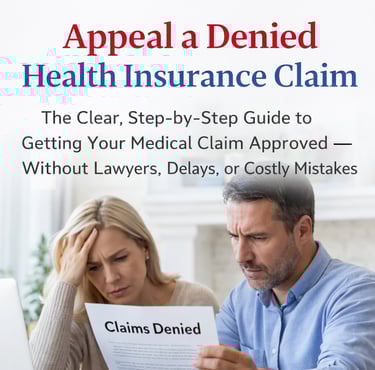
If your claim was denied because a preventive service was reclassified as diagnostic and you want a clear, step-by-step system to lock in preventive intent, correct coding misuse, and enforce ACA protections, there is a proven path.
👉 The guide “Appeal a Denied Health Insurance Claim” includes advanced strategies for preventive-care disputes, with coding-clarification templates, provider coordination tactics, and escalation strategies built for U.S. insurance appeals.
When insurers reclassify prevention as diagnosis, evidence usually puts it back where it belongs.https://appealhealthinsuranceclaimusa.com/appeal-denied-health-claim-guide
Contact
We are herfe to answer every your doubts
infoebookusa@aol.com
© 2026. All rights reserved.