
Insurance Claim Denied Due to Incomplete or Incorrect Enrollment When Insurance Says You “Weren’t Properly Enrolled” — and How to Prove Coverage in the U.S.
Insurance Claim Denied Due to Incomplete or Incorrect Enrollment When Insurance Says You “Weren’t Properly Enrolled” — and How to Prove Coverage in the U.S.
2/24/20263 min read
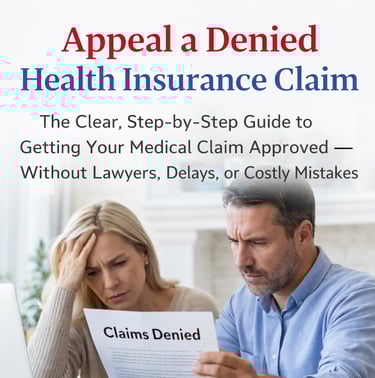
How to Appeal a Health Insurance Claim Denied Due to Incomplete or Incorrect Enrollment
When Insurance Says You “Weren’t Properly Enrolled” — and How to Prove Coverage in the U.S.
Few insurance denials feel as surreal as this one:
“The claim was denied due to incomplete or incorrect enrollment.”
You paid premiums.
You received an insurance card.
You were told you were covered.
And yet, insurance claims you weren’t properly enrolled.
In reality, enrollment-related denials are among the most unfair and most frequently overturned denials in U.S. health insurance — because they often result from employer errors, system delays, or insurer processing failures, not patient actions.
This guide explains why enrollment denials happen, when they’re improper, and how to appeal them step by step — without accepting responsibility for administrative breakdowns you didn’t cause.
What Insurers Mean by “Incomplete or Incorrect Enrollment”
This denial typically claims that:
Enrollment data was missing or inaccurate
Coverage was not fully activated
Information was entered incorrectly
Eligibility files were out of sync
Importantly, this does not necessarily mean coverage didn’t exist — only that records were flawed.
Why Enrollment Denials Are So Common
Enrollment denials occur frequently because:
Employer HR systems and insurers don’t sync in real time
Enrollment changes are processed in batches
Life-event updates are delayed
Marketplace enrollment files lag
Insurers rely on automated eligibility feeds
These failures are systemic — not patient-driven.
The Most Common Enrollment Error Scenarios
Most enrollment denials fall into predictable patterns:
New hire coverage not activated on time
Life event changes (marriage, birth) not processed
Plan selection recorded incorrectly
Wrong effective date entered
Employer sent incomplete files
Insurer failed to update eligibility systems
Each scenario creates strong appeal leverage.
Payment of Premiums Is Powerful Evidence
One of the strongest appeal arguments is simple:
Premiums were paid.
Appeals should include:
Payroll deduction records
Bank statements
Payment confirmations
If premiums were accepted, insurers have a high burden to deny coverage.
Insurance Cards and Member Portals Matter
Insurers often issued:
Insurance ID cards
Member portal access
Coverage confirmations
Appeals should document:
Receipt of ID cards
Portal screenshots
Welcome letters
These representations create reasonable reliance.
Effective Dates Are Often Entered Wrong
Many enrollment denials hinge on:
Incorrect coverage start dates
Appeals should clarify:
Hire date
Life event date
Plan effective date
Policy language governing effective dates
Date errors are among the most common insurer mistakes.
Employer Errors Are Not Patient Responsibility
Many enrollment problems originate with:
Employer HR departments
Benefits administrators
Third-party payroll vendors
Appeals should assert:
Employees reasonably relied on employer enrollment
Employers acted as insurer agents
Coverage failures are not patient fault
This argument is especially strong in employer-sponsored plans.
Marketplace Enrollment Errors
ACA marketplace plans face unique issues:
Enrollment file transmission delays
Subsidy verification issues
Retroactive corrections
Appeals should document:
Enrollment confirmations
Marketplace correspondence
Effective coverage notices
Marketplace enrollment often exists even when insurer systems lag.
Retroactive Enrollment Corrections
Insurers sometimes:
Fix enrollment retroactively
Update eligibility after claims are denied
Appeals should demand:
Retroactive claim reprocessing
Correction of denied claims
If enrollment is corrected, claims must follow.
Coverage in Effect at Time of Service Is the Core Question
The central appeal question remains:
Was coverage intended and effective on the date of service?
Appeals succeed by showing:
Enrollment was completed
Premiums were paid
Insurer representations existed
Administrative imperfections do not erase coverage intent.
COBRA and Enrollment Gaps
Enrollment denials often occur during:
COBRA transitions
Employer plan terminations
Appeals should emphasize:
Retroactive COBRA coverage rights
Election and payment timelines
COBRA often restores coverage back to the service date.
Insurers Often Fail Notice Requirements
Appeals are strong when:
Enrollment issues were never communicated
Coverage termination was not disclosed
Patients learned only after denial
Lack of notice undermines insurer authority.
Documentation That Wins Enrollment Appeals
Strong appeals include:
Enrollment confirmations
Payroll records
Employer emails
Insurance cards
Portal screenshots
Prior paid claims
Consistency of coverage evidence is powerful.
ERISA Plans and Enrollment Denials
Under ERISA:
Eligibility determinations must be reasonable
Retroactive denials are scrutinized
Procedural fairness is required
ERISA appeals should challenge:
Abuse of discretion
Failure to coordinate with employer
Inconsistent eligibility determinations
Process errors matter.
External Review and Regulatory Escalation
Enrollment disputes are excellent candidates for:
External review
State insurance complaints
Department of Labor inquiries
Regulators recognize enrollment failures as systemic problems.
Common Mistakes in Enrollment Appeals
Avoid these errors:
Accepting enrollment denial without documentation
Failing to gather employer records
Ignoring premium payment evidence
Paying bills before appealing
Assuming “enrollment error” is final
Enrollment denials require investigation — not acceptance.
Why These Appeals Often Succeed
They succeed because:
Coverage intent is clear
Premiums were paid
Insurer systems failed
Notice requirements were ignored
Once timelines and records align, denials often collapse.
How to Know If Your Enrollment Denial Is Appealable
Ask:
Did I complete enrollment correctly?
Were premiums paid?
Did the insurer issue an ID card or confirmation?
Was I notified of any enrollment issue before care?
If yes to any, you likely have strong appeal leverage.
The Mindset Shift That Wins Enrollment Appeals
Stop asking:
“Did I do something wrong?”
Start asserting:
“Show me why coverage was not effective despite enrollment, payment, and insurer confirmation.”
That shift places responsibility where it belongs.
A Smarter Way to Appeal Enrollment-Based Denials
If your claim was denied due to incomplete or incorrect enrollment and you want a clear, step-by-step system to prove coverage intent, correct enrollment records, and force claim reprocessing, there is a proven path.
👉 The guide “Appeal a Denied Health Insurance Claim” includes advanced strategies for enrollment-related denials, with documentation checklists, employer coordination tactics, and escalation frameworks built for U.S. insurance plans.
When insurers say you weren’t enrolled, records prove otherwise.https://appealhealthinsuranceclaimusa.com/appeal-denied-health-claim-guide
Contact
We are herfe to answer every your doubts
infoebookusa@aol.com
© 2026. All rights reserved.