
How to Appeal a Denied Mental Health or Substance Use Treatment Insurance Claim When Insurance Undervalues Care — and How to Enforce Your Rights in the U.S.
How to Appeal a Denied Mental Health or Substance Use Treatment Insurance Claim When Insurance Undervalues Care — and How to Enforce Your Rights in the U.S.
2/11/20263 min read
How to Appeal a Denied Mental Health or Substance Use Treatment Insurance Claim
When Insurance Undervalues Care — and How to Enforce Your Rights in the U.S.
Mental health and substance use treatment denials are among the most damaging insurance decisions patients face.
Not just financially.
Clinically.
Emotionally.
Sometimes fatally.
And yet, many of these denials violate federal parity laws, misapply medical necessity standards, or rely on outdated stigma-based logic.
This guide explains why mental health and substance use claims are denied, what the law actually requires insurers to cover, and how to appeal these denials effectively — without accepting lesser standards for mental health care.
Why Mental Health and Substance Use Claims Are Denied So Often
Despite legal protections, insurers continue to:
Apply stricter medical necessity standards
Limit visit counts arbitrarily
Cut off care prematurely
Deny residential or intensive treatment
Treat mental health as less “medical” than physical care
These practices persist because many patients don’t realize their rights are stronger here than almost anywhere else in insurance law.
The Most Important Law: Mental Health Parity
Federal parity laws require that:
Mental health and substance use benefits be no more restrictive than medical/surgical benefits
Financial requirements (copays, limits) be comparable
Treatment limitations be applied equally
Many denials violate parity — even when they look “policy-compliant” on the surface.
Common Mental Health & SUD Denial Reasons
Most denials rely on one or more of the following:
“Not medically necessary”
“Does not meet level-of-care criteria”
“Maximum benefit reached”
“Outpatient treatment sufficient”
“Residential or intensive care not required”
Each of these is frequently misapplied in mental health cases.
Medical Necessity: Applied Unequally
Insurers often demand:
Immediate measurable improvement
Short-term stabilization
Narrow symptom definitions
This standard is often far stricter than what is applied to physical conditions.
Appeals should challenge:
Whether the same standard is applied to medical/surgical care
Whether risk of relapse or harm is ignored
Whether treatment interruption is medically unsafe
Parity requires equal treatment — not identical symptoms.
Level-of-Care Denials: A Major Abuse Area
Insurers frequently deny:
Inpatient psychiatric care
Residential treatment
Partial hospitalization programs (PHP)
Intensive outpatient programs (IOP)
by claiming lower levels of care are “sufficient.”
Appeals must show:
Why outpatient care is unsafe or ineffective
Risk of self-harm, relapse, or deterioration
Failure of lower levels of care
Stepping down too early is dangerous — and appealable.
Substance Use Disorder (SUD) Treatment Denials
SUD denials often rely on:
Moralized assumptions
Compliance arguments
Arbitrary sobriety expectations
Appeals should emphasize:
SUD as a chronic medical condition
Risk of relapse without structured care
Evidence-based treatment standards
Relapse risk is not treatment failure — it’s part of the disease.
Residential Treatment Denials
Residential care is frequently denied as:
“Not medically necessary”
“Custodial”
“Exceeding benefit limits”
Appeals should document:
24-hour structure necessity
Safety concerns
Failed outpatient attempts
Professional recommendations
Residential care saves lives — and is often improperly denied.
Visit Limits and Session Caps
Mental health benefits are often quietly capped.
Appeals should examine:
Whether similar caps exist for medical care
Whether caps are applied discriminatorily
Whether exceptions are allowed
Unequal limits often violate parity law.
The Treating Clinician’s Role Is Decisive
Mental health appeals rely heavily on:
Psychiatrist assessments
Therapist progress notes with context
Risk evaluations
Level-of-care recommendations
Strong clinician letters should:
Address insurer denial language directly
Explain risks of treatment interruption
Reject arbitrary timelines
Generic notes weaken appeals.
Risk Framing Is Essential
Mental health appeals succeed when they clearly document:
Suicide risk
Self-harm risk
Relapse risk
Loss of function
Harm to self or others
Risk is medical — not subjective.
Parity Violations: How to Spot Them
Red flags include:
Shorter coverage for mental health than medical care
Stricter criteria for admission or continuation
Faster discharge expectations
Denials based on “lack of improvement”
Appeals should explicitly raise parity concerns when present.
ERISA Plans and Mental Health Appeals
Under ERISA:
Insurers must explain denials clearly
Criteria must be disclosed
Decisions must be reasonable
ERISA appeals should demand:
Disclosure of medical necessity criteria
Consistency with medical/surgical standards
Correction of arbitrary decisions
Parity arguments are especially strong here.
External Review Is Extremely Powerful
External reviewers often:
Enforce parity standards
Reject unequal criteria
Overturn premature discharge decisions
Many insurers reverse denials before external review concludes.
Common Mistakes in Mental Health Appeals
Avoid these errors:
Accepting stigma-based language
Failing to raise parity law explicitly
Submitting emotional appeals without clinical framing
Ignoring risk documentation
Missing expedited review opportunities
Mental health appeals require structure, not apology.
Expedited Appeals Often Apply
Expedited appeals may be appropriate when:
Safety is at risk
Treatment interruption causes harm
Discharge is imminent
Delays can have irreversible consequences.
Why These Appeals Often Succeed
They succeed because:
Legal protections are strong
Insurers often overreach
Parity violations are common
External scrutiny is intense
When challenged properly, many denials collapse quickly.
How to Know If Your Mental Health Denial Is Appealable
Ask:
Would similar medical care be treated differently?
Is risk being minimized or ignored?
Are visit limits or criteria stricter than physical care?
Did providers recommend a higher level of care?
If yes, you likely have strong leverage.
The Mindset Shift That Changes Everything
Stop asking:
“Is this enough care?”
Start asserting:
“This denial applies unequal standards to mental health treatment.”
That shift invokes the law — not opinion.
A Smarter Way to Appeal Mental Health & SUD Denials
If your mental health or substance use treatment was denied and you want a clear, step-by-step system to enforce parity, document risk, and force coverage continuation, there is a proven path.
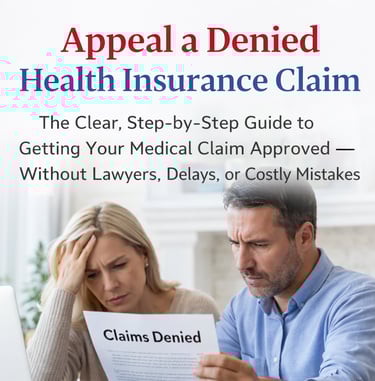
👉 The guide “Appeal a Denied Health Insurance Claim” includes advanced strategies for mental health and substance use appeals, with parity-based frameworks, documentation templates, and escalation tactics designed for U.S. insurance plans.
Mental health care is medical care — and the law agrees.https://appealhealthinsuranceclaimusa.com/appeal-denied-health-claim-guide
Contact
We are herfe to answer every your doubts
infoebookusa@aol.com
© 2026. All rights reserved.